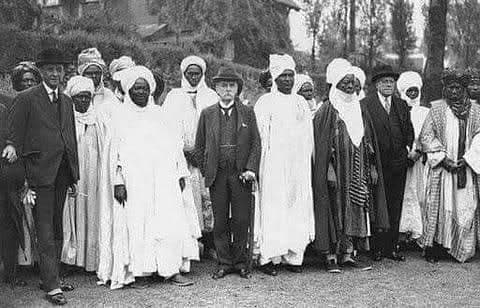
On January 1, 1914, Lord Frederick Lugard, the Governor-General of British West Africa, signed a document in Lagos. With a stroke of a pen, he fused the Northern Protectorate and the Southern Protectorate (including Lagos) into a single administrative entity: the Colony and Protectorate of Nigeria.
The motivation behind the amalgamation was primarily financial rather than national. The Northern Protectorate, running a budget deficit, was costly to maintain, while the Southern Protectorate generated a surplus through customs duties and trade. By uniting them, the British colonial office could use the southern revenues to balance the northern budget, reducing the financial burden on the British treasury.
However, the amalgamation was largely administrative. The British continued to govern the two regions separately, keeping distinct legal, educational, and land systems. This created a dual administrative legacy, fusing regions with completely different pre-colonial political traditions—the decentralized Igbo democracies, the Yoruba constitutional monarchies, and the Sokoto Caliphate’s central emirate system—without building a unified national consciousness.
The 1914 amalgamation is often described as the 'mistake of 1914' by some early nationalists, while others saw it as a historical necessity. Regardless of perspective, it represents the foundational blueprint of the modern Nigerian state, initiating the complex federal union that continues to be negotiated today.