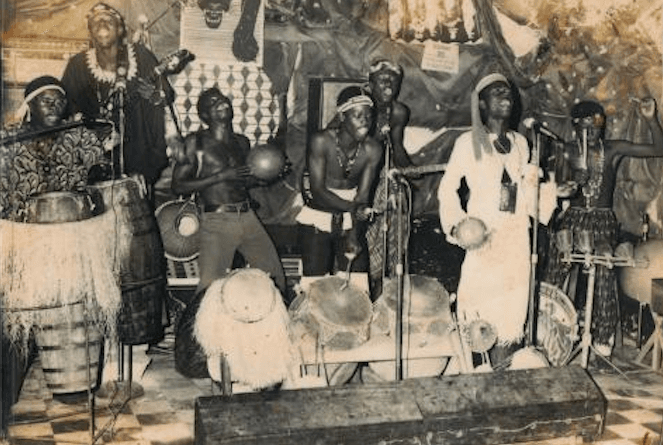
In the 1950s and 60s, the nightlife of Lagos, Ibadan, and Enugu was dominated by the brassy, syncopated sounds of highlife music. Originating in Ghana but quickly adopted and transformed by Nigerian musicians, highlife became the acoustic backdrop to the nationalist struggle and the subsequent independence celebrations.
Musicians like Bobby Benson, whose hit 'Taxi Driver' became an anthem, blended traditional Yoruba, Igbo, and Efik melodies with western big band instrumentation. Cardinal Rex Lawson infused highlife with deep emotional storytelling in Kalabari, while Victor Olaiya (the 'Evil Genius of Highlife') performed at the official Independence Ball in 1960.
Highlife was a cultural bridge. In a country with hundreds of distinct ethnic groups, the dancefloors of Lagos clubs like the Caban Bamboo or the Kakadu offered a space where people gathered to dance to the same rhythms. The music spoke of love, urban migrations, social critiques, and national pride.
The rise of highlife captured the brief, beautiful window of post-colonial optimism before the dark years of military coups and civil conflict. It remains a golden era in West African music, laying the rhythmic foundation for Afrobeat, Juju, and modern Afrobeats.