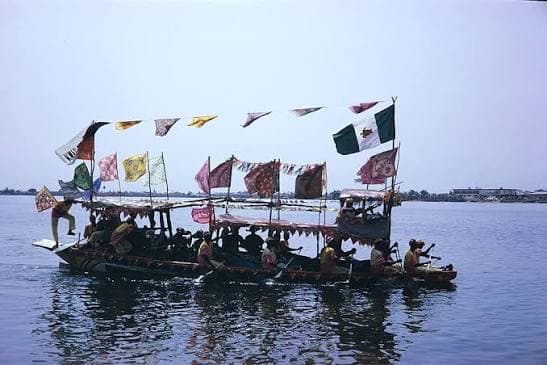
In January 1977, the streets of Lagos hummed with a different kind of electricity. Green-and-yellow buses shuttled between newly built housing complexes and the National Arts Theatre in Iganmu—a massive, military-hat-shaped monument that stood as a symbol of Nigeria's oil-fueled optimism. This was the Second World Black and African Festival of Arts and Culture, colloquially known as FESTAC '77.
For twenty-nine days, over 17,000 artists, writers, musicians, and activists from 56 countries gathered in Lagos. It was the largest pan-African gathering ever assembled. From the United States came Stevie Wonder and Gil Scott-Heron; from South Africa, Miriam Makeba and Hugh Masekela; and from Brazil, Gilberto Gil. They came to join hands, exchange ideas, and celebrate the global rich history of Black expression.
"Festac was not just a festival; it was a reclamation. We were declaring to the world that our history was not starting with colonialism, nor ending with it."
The festival occurred during Nigeria’s Second Republic preparations, funded by the 1970s oil boom. The federal government spared no expense, building the Festac Village to house participants and constructing new highways across Lagos. However, the festival also had its internal counter-cultures. Fela Kuti, the pioneer of Afrobeat, boycotted the official event, calling it a state-controlled distraction. Instead, Fela hosted his own counter-festival at the Afrika Shrine, drawing crowds of international artists, including Stevie Wonder, who preferred the raw political commentary of Fela's music to the official state galas.
FESTAC '77 left an indelible mark on Nigeria's cultural landscape. It established Lagos as a central hub of global Black culture and created institutions and memories that still shape Nigerian art, music, and national identity today.